I look outside, curious, as I do every morning, to see whether today I’ll catch a glimpse of the sun. It’s been several weeks now in which I think I’ve seen it no more than twice. With age, I’m becoming increasingly weather-dependent, with a need—almost a mildly pathological form of attachment—to light.
I used to see, on one of the streets where I walk Eros, an old man who was brought out every morning by someone, in a wheelchair, and placed in the sun. In winter and autumn he was warmly dressed, but he never missed a day of sitting with his face turned toward the sun, filling himself with its light. I haven’t seen him for some time now…
Today, the roof across the street is damp, and outside it has already grown dark. Yesterday was beautiful—far too warm for this time of year. Nothing is the way it used to be in my childhood. Normally, this was the period just before the winter break; I was waiting for my grades to be finalized and often felt anxious. I was never the most diligent child, and I don’t take pride in that, but neither were my results particularly bad. I managed reasonably well, as one might say. It was only in university that I truly began to learn, after having already taken a few hard lessons from life.
I was saying that the roof was wet, the sun well hidden behind a curtain of clouds pressing down on the tops of skeletal trees, their branches stretching out like scattered spears in what seemed almost a gesture of despair. Only the thought of coffee with a bit of milk could stir some faint enthusiasm in me, perhaps alongside the pleasure of a walk with Eros through a city damp with cold drizzle, calmed by a late-December Sunday. I find myself thinking that this dependence on sun and warm weather comes with age, as a way of compensating for the growing imbalance between what you would like to do and what you are still able to do.
These year-end endings—what can I say about them?—strike me as deeply questionable. Christmas and all the holidays feel like divine attempts to compensate for the despair that creeps in when you realize another year has passed, that yet another imaginary curtain is about to fall between today and tomorrow—a final-act curtain meant to remind you that the acts are numbered.
I would gladly abolish year endings altogether—and even now I feel a hollow sensation in my stomach at the thought that, very soon, we will once again throw ourselves into the same conventional carousel, where January is declared a new beginning, where we invent fresh goals and raise new, lofty hopes. They are all like brightly colored kites, endlessly destined for the same unreliable winds.
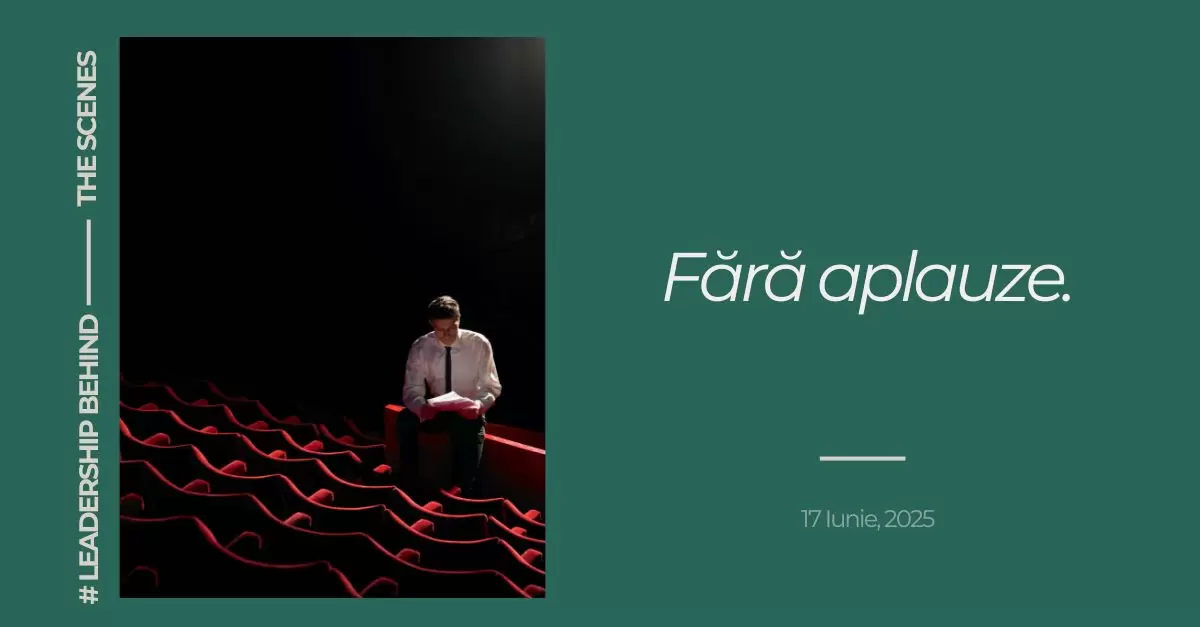
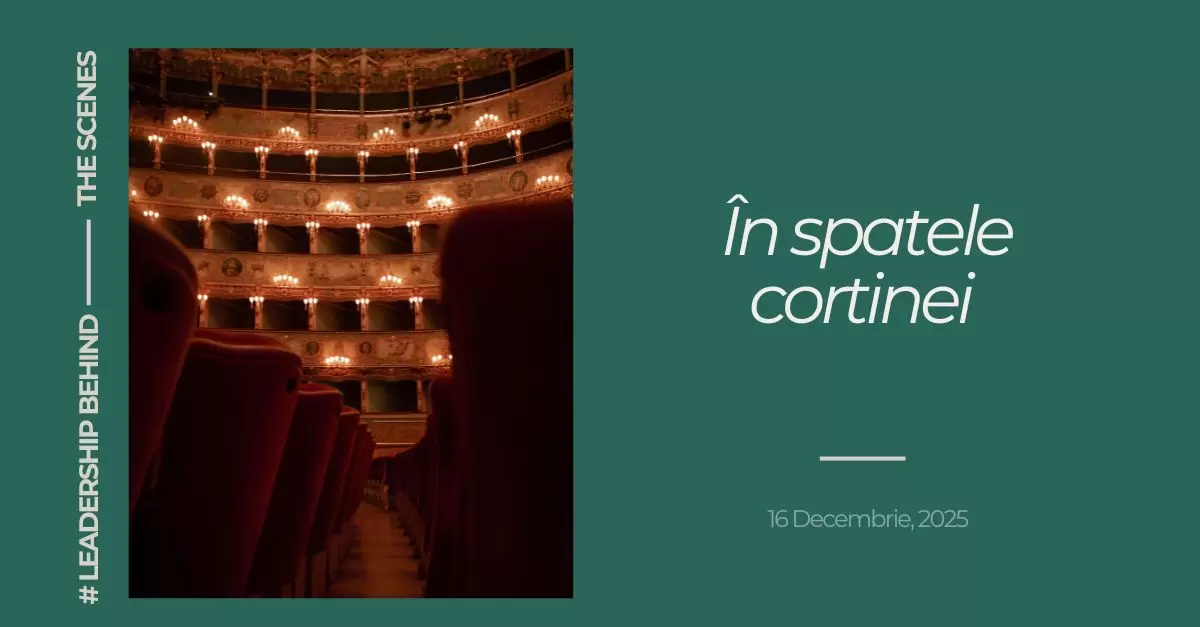
I write these texts in an attempt to put into words states of mind that often remain outside the light. They are reflections from behind the leadership stage, from that narrow, quiet space where applause fades and the curtain falls. I write to you from a place of separation— not necessarily painful, but profound—between myself and others.
Leaders, in general, feed voraciously on interaction with others: on the noise of meeting rooms, on the confident steps across conference stages, on interviews given and on the comments—spoken aloud or whispered—that circulate about them. In moments like these, when everything slows down and the focus on what they produce suddenly fades, they wake up dazed in front of their own lives, stunned by their authenticity, unprepared to face it.
Great masters of managing the expectations of thousands, yet incapable of managing their own expectations of themselves. Paradoxical, isn’t it?
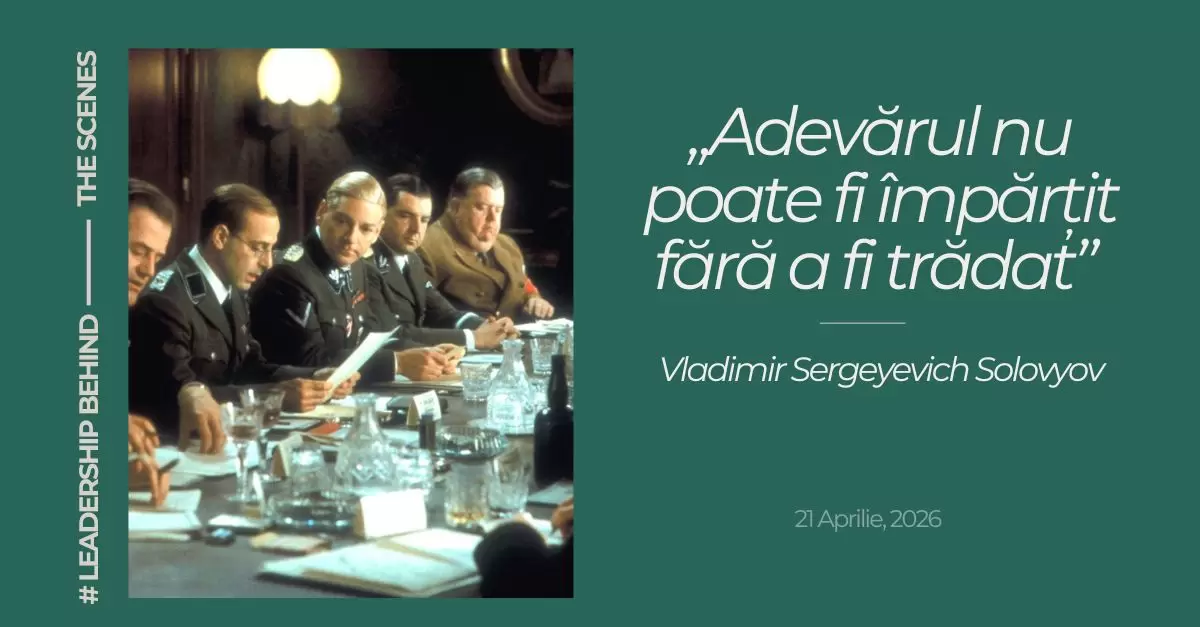
I recently watched Jay Kelly, a film that gave me much to think about. In it, the favorite of all women—George Clooney—plays a film actor who has reached what might be called late youth and who, despite being famous, wealthy, loved, and applauded, suddenly finds himself face to face with his own life. I’m referring here to the life that comes after fame—now a vague cutout surrounding the intense one he lived as an actor.
What struck me was the astonishing speed with which his life as a major star comes to a halt, trading places with his life as a father, a friend, a man. And then there was the piercing effort and persistence with which this once-adored character now struggles to carve out a place for himself in his own story as an ordinary human being.
Don’t misunderstand me—I’m not heading toward the somewhat banal theory of what matters in life and what doesn’t. He had made millions of people happy, worked enormously hard, given up many things, and enjoyed just as many in return.
What touched me, alongside the speed of change, were these things: the difficulty of being accepted… the inability to step into your place as an ordinary person… the void that opens around you when you want to be normal, yet at the same time recognized for what you have created.
Leadership positions, as well as positions of broad recognition, are often masterful traps for normality—black holes capable of absorbing entire lives, quickly and silently.
The envious gaze from the outside never sees beyond the dark corners of corridors that appear bathed in brilliance. The loneliness of someone surrounded by crowds does not come from being truly alone, but from the dependency they cultivate on interaction at any cost. The pauses between two sustained notes feel endless, and silence becomes the most dreadful sound.
As I move forward along my path, I feel how I give and receive. I know I cannot measure it, yet I sense that with every exchange I lose a little. I feel it in the rhythm of my steps, in the depth of the emptiness around me; I feel it in these December endings. And I know that, as another curtain falls over an act, I am getting closer to the effort I will have to make in order to step into my own life.
The sunlight reaches me exhausted, filtered through so many clouds, telling me it has grown tired along the way, through billions of reflections. Light counts days, and I find myself wanting to ask whether, in counting days, it too has a year’s end. If it does, then perhaps it is tired for that reason as well.
Perhaps it has set its goals and is now taking stock; perhaps it is making plans for the year ahead—and who knows what else the measure of the universe, time itself, might still bring it…?