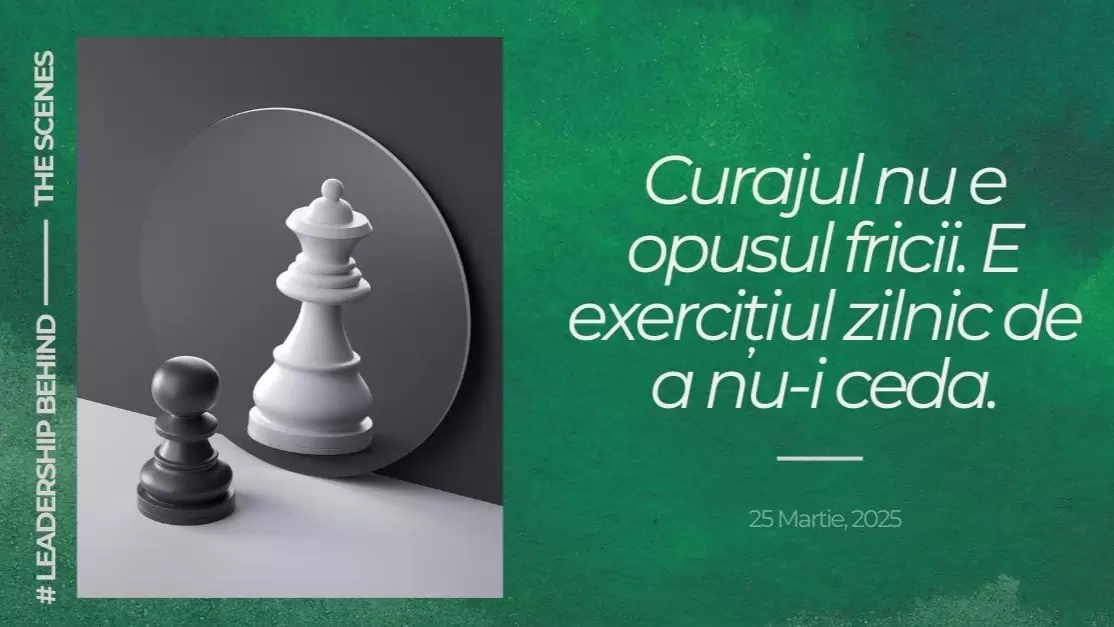
Fear!
At first, she would visit me quite rarely… there was something gracious about her as she showed up, sparking my interest by the mystery she would spread around her. I had started to love how I felt when she would stop by unexpectedly, as was her habit. I felt the need to submit her, to see her break down and give in. She would not stay long and I used to blame myself for not paying her enough attention. Maybe… what used to be her space would linger like a memory and I often looked out on the horizon, maybe I could see her at the edge of time … I never saw anything. She would show up out of the blue, quite close to me, but I would never sense her before she came. It was a satisfying game for me.
As time went by, she started to visit me more often. I had started to sense the moment she would come and each time I would guess which way she was coming from. There was nothing joyful anymore about meeting her. It was as if she was wasting my extremely busy life in vain. She had made it a habit to stay on just to tell me unpleasant things, and I found this exhausting. I needed a defence mechanism, so I started lying to her and sending her places, paying attention just to see her go.
Some of the things she said would actually come true, which made me like her even less.
Ill omen!
Each time, her stories would become more and more elaborate, and my problem was that things would never, and I mean never, happen as she said they would. I decided to avoid those meetings as much as I could! It didn’t work out …
Years later, things changed for the worse even more.
She would visit me at the worst possible times: in the evenings, as I was relaxing, taking my sleep away with her stupid stories, in the middle of the day, when I didn’t have time for anything else, or, even worse, on holidays, blaming me for not booking a place for her as well.
In the end I had stopped distinguishing between her voice and my own reflection. Time had given her authority, and my mind – her accomplice – had grown to accept her fiction.
I started to look for her instinctively, gazing away, expecting to see her approach, ready to corner me yet once more. I expected to recognise her wrinkles everywhere I went, to feel her gaze crush me like a silent burden. That feeling would linger with me for days on end. I would obsessively think back at what she said, like the smoke coming out of an old bus, going nowhere but soiling everything it left behind.
These days, as I am writing, I see her quite often. Years have connected us in a strange way – it was like an old, passive friendship. She’s the kind of bitter, cheeky companion, slamming any possible and impossible ideas in your face, with no consideration whatsoever for you or your state, but one you are never able to send away. There are too many things between us! I would often sit in my armchair with a cigar and a glass, just relaxing, and there she came! Quiet, familiar, she would first come next to me to smell the cigar. She would just stay there and I was able to guess what she was going to say, what she had in mind. She would start talking in her high-pitched voice, and I would talk at the same time, just so I would stop hearing her.
I think she wanted the best for me, but she tormented me with her made-up stories. She’s part of my long journey and I cannot stop thinking what things would have been like had it not been for her … She no longer made me as scared or intrigued as she used to. But I know she’s going to stay by my side – maybe softer, maybe more tired, but always ready to come back, as often as I make room for her.
Being an entrepreneur in difficult in countless ways, but one of the most difficult to manage is fear.
It’s easy to believe that entrepreneurs are brave (and they are!) and that this makes them fearless, but it’s not true.
Fear does not go away as you reach success.
It has the ability to sneak back in just as you think you have learnt how to manage it. It grows on two dimensions: one is age and the other one is the stake. Normally, at a younger age, fear is better tolerated, risk appetite is higher as your stakes are lower. Then, as you grow old, tolerance gets lower and your stakes get higher. Mistakes would cost more. So would hesitations.
So the topic is not fear, but the relationship we create with it. As Tao philosophy reminds us that every thing also bears its opposite, fear is both a guard and an executioner. Only we can keep them balanced.
It is pointless to either hate it or ignore it. It is painful to accept it. It is, however, necessary to resist it.
No great leader in history has gone without fear. Winston Churchill, at wartime, would utter incredibly powerful words in front of the public, but behind closed doors, we would face dense fear, as well as depression – he would call it ‘’black dog’’. Alexander the Great? He wasn’t immune to it either. But he took his fear to the end of the known world.
Therefore, leaders are not born without fear. They are born in spite of it.
There is not enough talk about fear, about its effects in relation to entrepreneurship and leadership. On the contrary, too much emphasis is placed on the idea of the fearless business leader. There is not enough talk, either, about how vulnerable, rather than about how strong an entrepreneur can be.
As a creator of value and a warrant to the progress of mankind, an entrepreneur is all too often seen as a result of what society is made of. Their emergence and development are mainly accounted for by their own interest or passion, which leads to the both bright and shady image they get. Even though, at the beginning, their interest and/or passion are the engines which launch them out on the orbit, thus relieving them from the gravity of the masses, their path to stardom is paved with much more than that.
They would soon reach places in which all the reasons for which they took off no longer mean anything.
At times, they get stuck in a void, threatening space. Wonderful, rare instances of supernovae would sometimes light up their, otherwise, long dark existence.
Bravery is only useful at the beginning, when the time comes to choose. Then it is only the balance used for fighting their fears that can keep them afloat.
I realise that, when my old friend would start visiting me less often, this would mean that I started to do less of what I love.