We associate it with defeat and frown upon it as a weakness that no one wants to know. We vehemently disapprove it, in the face of the great heights that glimpses into the horizon, and we exclude it from leadership textbooks as a dangerous idea that would rob us of glory ahead of time.
The withdrawal.
Of course, I will mainly refer to stepping down from leadership positions, but I think it can very well refer to any other position, situation be it life or professional.
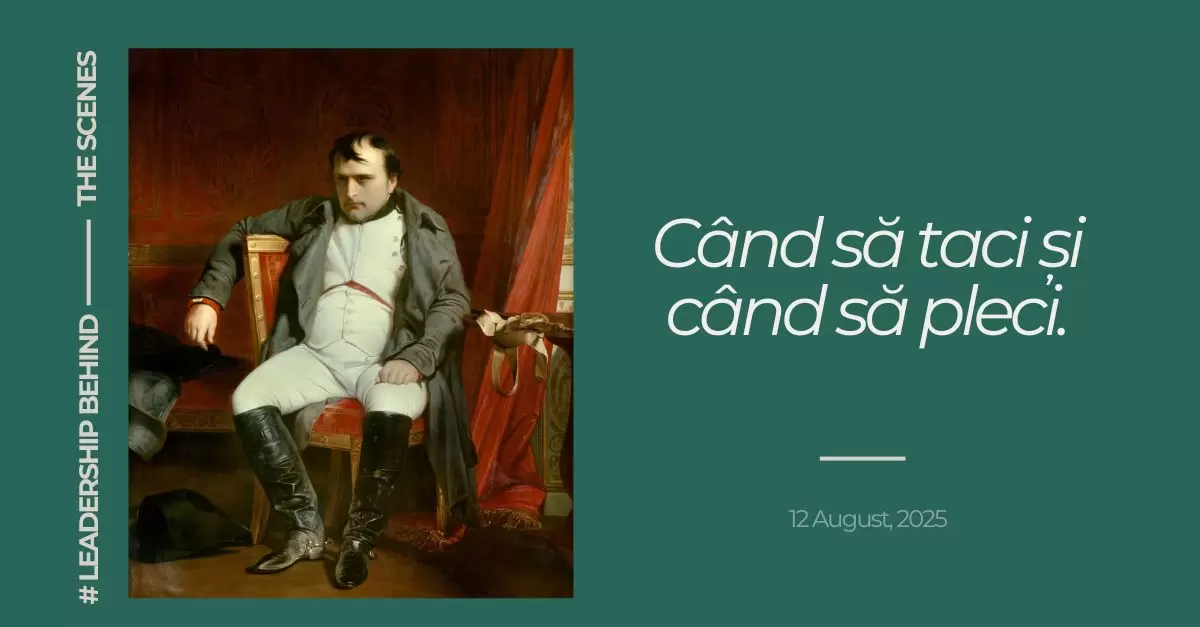
It is such an important subject that thousands of leaders would have given anything to find out the answer to this question. Think of Napoleon, of Alexander the Great, of any leader who was at the height of military, political or economic success and, continuing to do what he was doing, collapsed, perhaps not into oblivion, but into loss and decline. Think of how history would have changed if Napoleon, upon his return from the island of Elba, had appealed for peace, for a treaty that would unite, not divide again the powers of Europe!? Of course, he might not have been Napoleon… But how would it have been and what would have changed in the course of history!? Or think of Caesar, if after winning the civil war he had only temporarily named himself dictator and had ceded the control of power, or of Robespierre, or of Ceaușescu…
When do you say: Stop!? And, very importantly, is the answer to this seemingly simple question part of leadership or not?
It was around 2010 when I first felt that I had surprised myself, that I had surpassed what I had hoped to achieve. This thought may seem arrogant and too much, but I'll tell you what I felt. I didn't just wake up one morning and say: that's it, I'm great, no...! It set in slowly, like a muscle fever, not like a stab. Slowly, slowly I realized that I was good, better than I thought. Of course, age and ignorance also helped me believe this. The idea settled there daily and the risks seemed insignificant in its shadow.
This lasted 2-3 years and then everything fell apart...
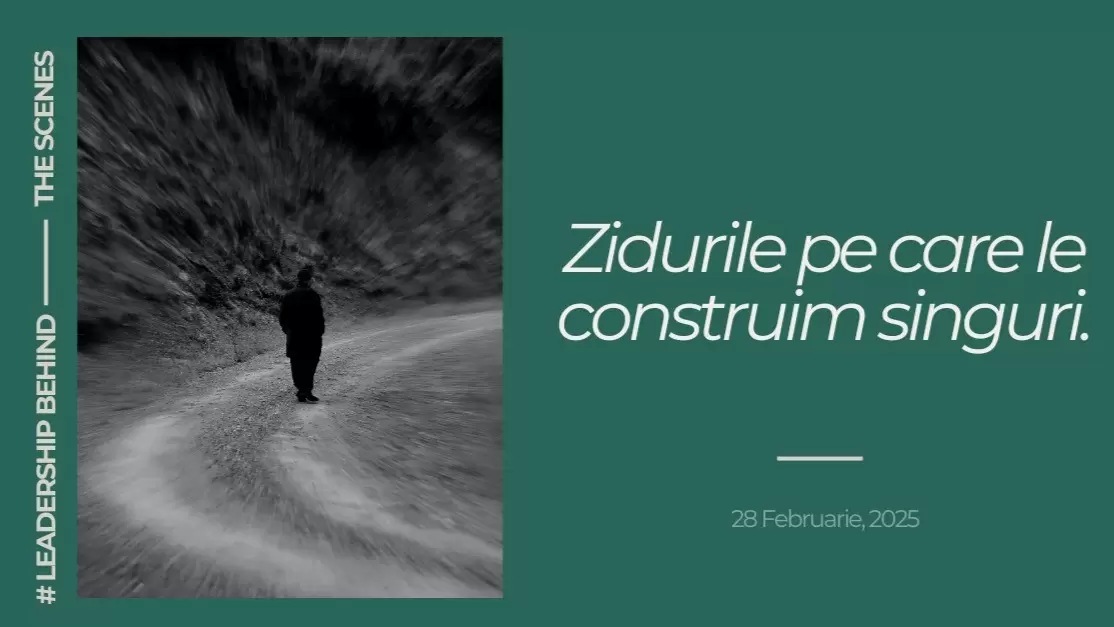
Not for a moment, until the ground fled from under my feet, did I think that it would be a good time to step down, maybe start something new. Like a wave that erases the sand castle, everything disappeared before my eyes. Then I thought about stepping down, running away, or rather… I think everyone thought about running away when they were losing and it never even crossed their minds to say "Stop" when they were winning!
What makes us think about withdrawal? Pain, bitterness of the defeat that happened or foreshadowed, fear!? All negative feelings, full of resentment and carrying regret. Is this a good time to withdraw, are these appropriate feelings to leave!? And then, when to think about it!?
I didn't leave and I went down into the valley of loss and despair. It's nice to talk about the courage and determination with which you overcome challenges, but it's, unfortunately, false. It's ugly and hard to lose, to see the end, to encounter your limits, to know your flaws. I'm glad I didn't leave because those challenges defined me and became, in the end, the highest moments on the wise path. What makes us move forward? The hope that it will be continuously better, the hubris that we can do more. The overestimated expectation of ourselves, the thought that we can't make mistakes. All are feelings coming from pride, from the unbounded confidence in our capabilities.
Maybe we feel a little bit superhuman.
Well, and!? Both impulses, the one to stop and the one to move forward, are fuelled by the dark and deep well of our negative traits!?
But let's think about George Washington, Nelson Mandela, Charles de Gaulle. Whether he decided not to continue after two terms, or after one, whether he wanted to stick to his principles, or he thought of setting an example, they all showed consummate leadership, giving up when they seemed invincible, when they could have continued or were pushed to continue. They wanted to send a message, they understood that the decision to step down, the moment you say STOP - must be motivated by positive feelings, by trust in others, by lack of hubris, by accepting personal limits.
I, for one, have climbed and descended the slope of success many times - that's how I learned that after every peak there is a valley, and from any valley you can climb on a peak again.
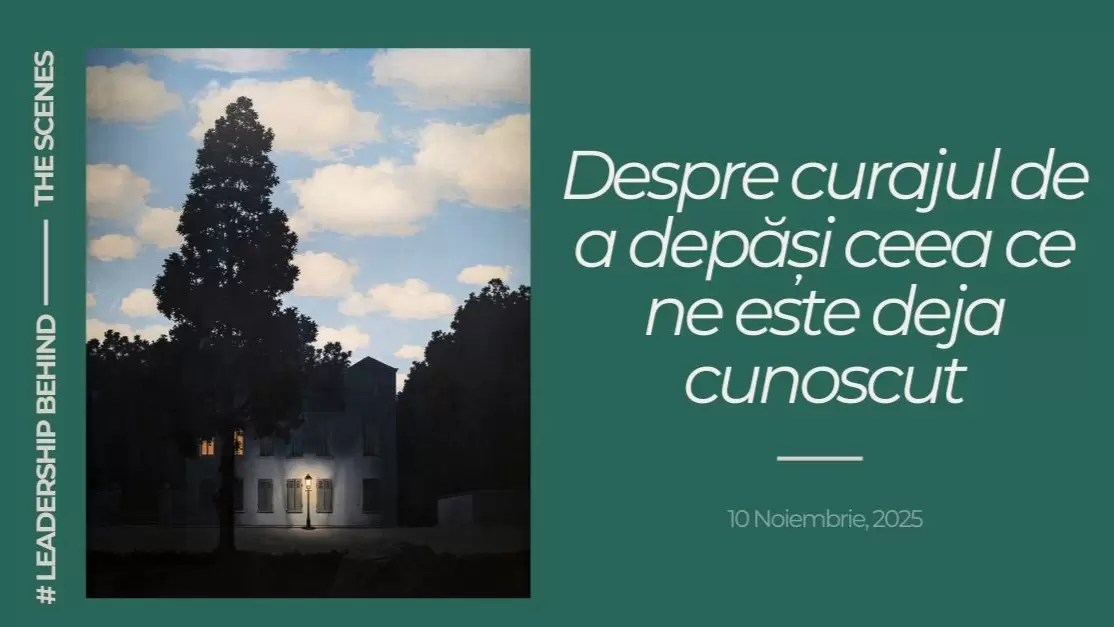
I thought the hardest thing was to know when you reached the top and to evaluate if you would be able to climb again… But that is not the secret, the most important thing is to know how to listen to yourself and to have climbed and descended enough times to know yourself. It is also important to look around you and love your people, because that will make you choose correctly. Not to give up when you have brought them down to the valley and not to lead them to the edge of the abyss when you climb. To understand that the world is a strange, miraculous puzzle, in which each new piece put in a place creates a different picture.
I leave you with these thoughts on a late summer day, when only the evening wind whispers about autumn, and the heat of midday makes you dizzy and makes you believe that summer is endless. But we know, autumn is near!