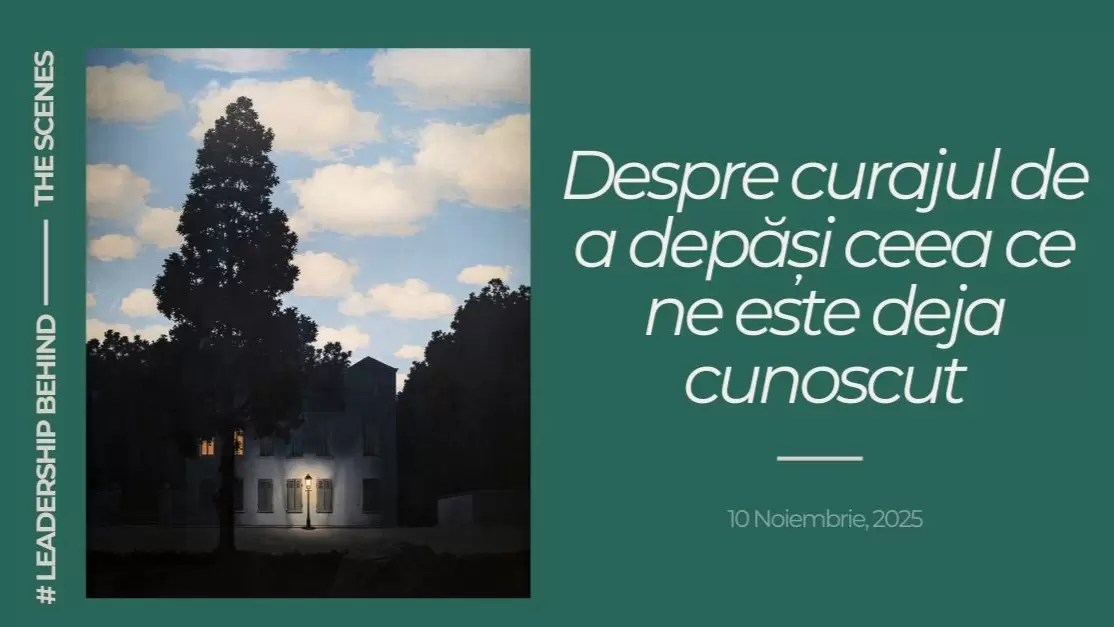
It felt as if my friend’s stride was firmer than usual, a little longer… We were walking together through the dark, in a park that seemed intent on hiding all of autumn inside it — the early dusk, the heaviness in the air, and perhaps every thought carried by anyone crossing it. Here and there a streetlamp, too few to show you the way, too many to let you look for it fearfully.
“Do you think people truly evolve?” I asked, picking up an old conversation we never really finished.
“Some would say yes, others no…” he replied, in that philosophical tone of his.
“I’m asking because it’s obvious that we progress and mature. We learn to do some things better, then our strength fades, and we live, somehow, inside the Gaussian curve of our abilities over time. And still, we don’t know if we can evolve deeply — to build a version of ourselves closer to perfection — or if we’re simply tracing that inevitable curve shaped only by lessons gathered from experience.”
“You’re asking whether our spirit can grow beyond what nature and accumulated experiences kindly offer it — through personal, spiritual, and intellectual effort — reaching a higher position on the road toward an ideal. But that assumes we must first define that such an ideal exists, and what it might look like,” he said, stopping for a moment before walking again, perhaps even more decisively. “There’s this whole discussion about one’s purpose in the universe, and about the state of well-being that comes from discovering it. Nietzsche said: if you know the ‘why’, the ‘how’ becomes simple… and that’s where well-being begins.”
“So you’re saying that a person’s evolution is connected to discovering the purpose of their existence and shaping the self in service of that purpose…” I echoed aloud.
“I’m saying,” he paused again, “that personal evolution cannot be measured against external standards. It’s the process of moving closer to your ideal self — measured by your ability to fulfill your purpose. And that purpose is not some sacred mission built around others’ expectations, but the highest expectation you have of yourself.”
Night thickened slowly around us, like a heavy mist swallowing the edges of the path and leaving only a thin ribbon of road beneath our feet. Leaves fell rarely, almost ceremonially, carried by a gentle wind that seemed to know more than we said out loud.
I no longer know whether this conversation truly happened or not, but I return often to that park glowing with wet asphalt and the scent of autumn.
Somehow, in that moment, with that conversation, the belief was born in me that we can evolve deeply — that we can grow closer to our own expectations and, in doing so, reach a genuine state of well-being.
If you ask me how many people I’ve seen actually do this… let me disappoint you. Very few.
People are born, then pass through a stage of formal and informal education where they accumulate knowledge. Then they enter a period of training, gaining skills built on that knowledge.
And then — for the vast majority — that’s it. I know things, I apply what I know, and society rewards me with a place where the more I know and the better I apply what I know, the more I’m compensated. Money, status, and then the ever-desired comfort.
Material comfort, but especially psychological comfort: I’m good! The best even — look what I’ve accomplished!
Psychological comfort kills evolution. It’s like alcohol: it gives you a temporary, false sense of fulfillment and euphoria. I’m comfortable where I am because I do what I know, and I do it well — even very well. It seems enough. But the real question is whether what you do daily aligns with what you truly expect of yourself.
Here people split into several categories: those who don’t notice a significant gap between what they do and what they expect of themselves; those who notice the gap but choose comfort over the fear of discomfort and change; and, fortunately, those who are willing to step into the unknown — abandoning familiar skills and knowledge and seeking new ones that bring them closer to the purpose they’ve discovered.
In this carousel of accumulating knowledge followed by applying it, one essential element is missing — attitude. The right attitude always leads to evolution, and it’s one of the key ingredients separating the categories I mentioned earlier.
The comfort zone is that boundary of personal and professional activity where you’re competent, tasks feel easy, results come quickly, and everything is predictable, safe, and linear. Boring.
Leaving the comfort zone begins with asking questions, challenging your expectations, seeking answers — and continues with the decision to abandon safety, push yourself to acquire new knowledge, and practice new skills. It continues with the decision to step into uncertainty and discomfort.
I look down the dark alley and almost see the succession of iterations:
learn, apply, fail… learn again; apply, succeed; seek something else, find it; learn, apply… from the past.
Some parts are lit, others swallowed in darkness. All of them are part of the path that brought me here. I don’t know what lies behind me, but I know I’ll turn that way and walk. Maybe a bit to the right or left, but I know I won’t stop here.
I suspect it’s dark, and I’ll need to bring my own light. I suspect it will be too cold, and sometimes too warm.
But I am certain I know how to move forward — because I know why.